Emergency water heater repair: what to do before help arrives
A leaking or dead water heater gets worse by the minute. Here's the exact sequence to shut it down, stay safe, and limit damage before our crew reaches your door.
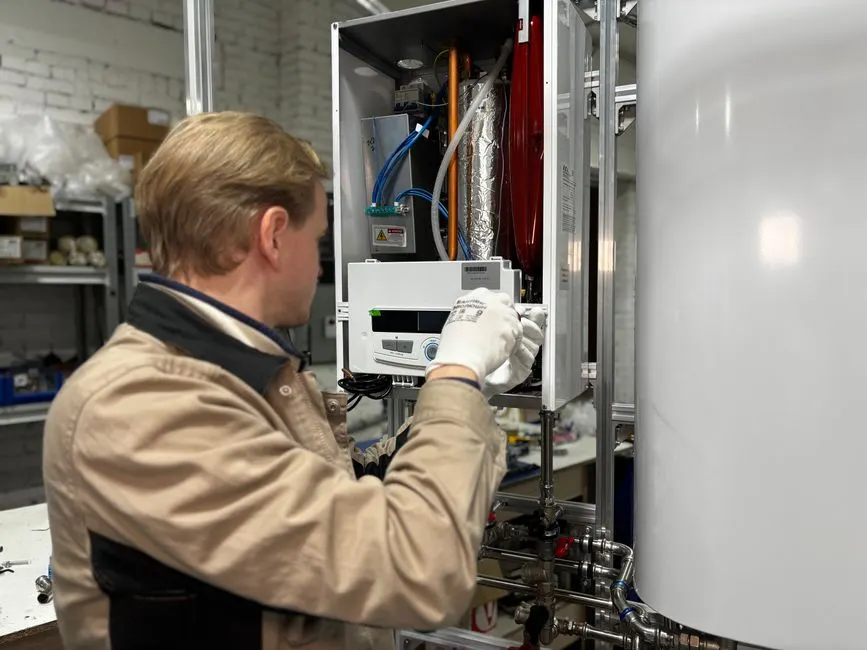
Shut off the water supply to the tank first, then kill the power or gas, and then start pulling water out of the tank or mopping it up. Those three moves - water off, energy off, drain or contain - stop 90% of the damage a failing water heater can do in the first hour. Emergency water heater repair what to do before help arrives comes down to that sequence, and getting it right buys you time without making the repair more expensive.
Everything below is the same checklist we walk Indiana homeowners through on the phone while a truck is already rolling. It covers shut-off valves, gas and electric differences, safety limits, and what a 2026 repair actually costs around here.
Emergency water heater repair: the first three moves
Emergency water heater repair steps in Indiana start with isolation, not diagnosis. You do not need to know why the tank failed before you stop the water - you need the leak contained so it does not reach drywall, subfloor, or a finished basement ceiling.
Here is the order that works whether you have a 40-gallon gas tank in a Fishers utility closet or a tankless unit on a garage wall:
- Shut the cold-water inlet valve on top of the tank (or the cold line feeding a tankless unit). Turn it clockwise until it stops.
- Cut the energy source. Gas: turn the thermostat dial to OFF, not just to pilot. Electric: flip the double-pole breaker at the panel.
- Contain and drain. Put a bucket under the drain valve, run a garden hose to a floor drain or outside, and open the valve. If the tank is already empty, just mop and set up fans.
If the leak is coming from a fitting rather than the tank body, you may be looking at a repairable issue rather than a full replacement. Our team handles water heater leak repair in Indiana every week, and a failed nipple or T&P valve is a very different job than a rusted-out tank floor.
How do I shut off my water heater in an emergency?
You shut off a water heater by closing the cold-water inlet valve on the tank's top, then cutting gas or power, then opening the drain valve at the bottom to relieve pressure. The whole sequence takes about four minutes on a standard tank.
The inlet valve is almost always the brass or copper-handled gate valve on the cold side - the pipe coming in from the house, not the hot line going out. On newer installations you will see a ball valve with a lever handle. Lever perpendicular to the pipe means closed. Gate valve: turn clockwise until it seats.
If the valve will not budge, do not force it with a pipe wrench and risk snapping the stem. Go to the main shut-off for the house instead. In most Central Indiana homes that is either at the meter or where the service line enters the basement. Once the house main is closed, the tank stops refilling and the leak slows to whatever is already in the tank.
For a tankless unit, the shut-off is the cold inlet valve under the unit. Close it, then unplug the unit or flip its dedicated breaker. Tankless heaters hold less than a gallon of water, so the mess is smaller - but the freeze risk in an unheated Indiana garage in November is real, and a cracked heat exchanger is not a cheap fix.
Gas, electric, or tankless: what changes
Gas and electric water heaters fail in different ways, and the shut-off order changes slightly for each. Knowing which one you have before the truck arrives saves the technician time and you money.
Gas water heaters
Turn the gas control knob to OFF, not to PILOT. If you smell gas - a rotten-egg odor near the unit - do not touch any switch, do not use a phone inside the house, and get everyone outside before you call. That is a utility emergency first, a plumbing call second.
Common gas failures we see around here: a thermocouple that will not hold the pilot, a clogged burner from Indiana's hard water scale, and a failed gas control valve. Our gas water heater repair in Indiana techs carry those parts on the truck because they are the three most frequent calls.
Electric water heaters
Kill the breaker before you drain the tank. Running an electric element dry for even 30 seconds can burn it out, and a dry-fire turns a $180 element swap into a $400 repair. If your breaker panel is not labeled, flip the main for the house - it is safer than guessing.
Electric tanks in this region also deal with heavy sediment. If you hear popping or rumbling, that is scale on the bottom element, and it is one of the most common reasons we get called for electric water heater repair in Indiana.
Tankless units
Tankless heaters rarely flood a floor, but they do throw error codes and go cold. Close the inlet, kill power, and note the code on the display - that code tells the tech exactly where to start. Scale is the number one killer of tankless units in Indiana, where water hardness often runs 10 to 15 grains per gallon. Annual tankless water heater maintenance in Indiana is what keeps those units from failing mid-shower.
Emergency water heater repair safety: what not to touch
Emergency water heater repair safety in Indiana comes down to three hard rules: no standing water near live electricity, no open flame near a gas leak, and no pressure-relief valve plugged for any reason.
- Do not stand in water to flip a breaker. If the floor is wet near the panel, kill power at the meter or call us first.
- Never cap or plug a T&P valve. That valve is the tank's only defense against a BLEVE - a boiling liquid expanding vapor explosion. If it is dripping, it is doing its job.
- Do not relight a pilot if you smell gas or the burner area is wet. Water and gas controls do not mix.
- Keep the area clear. A 50-gallon tank full of water weighs over 600 pounds. If it is rocking or the floor is soft, do not stand next to it.
If you are not sure whether the water is touching an electrical source, treat it as if it is. Call us and we will walk you through it. We have talked homeowners through this in Indiana water heater in Indianapolis basements and rural crawlspaces alike, and the answer is always the same: safety first, water second.
How much does emergency water heater repair cost in Indiana?
Emergency water heater repair cost in Indiana runs $250 to $650 for most common failures in 2026, with after-hours calls adding $75 to $150. A full replacement, if the tank is shot, lands between $1,200 and $2,400 installed depending on size, fuel type, and venting.
Here is what drives the number:
- Part cost. A thermocouple is $15 to $40. A heating element is $30 to $80. A gas control valve is $150 to $300.
- Labor. Standard diagnostic and repair runs $150 to $300 during business hours.
- After-hours premium. Nights, weekends, and holidays add $75 to $150 in most of Central Indiana.
- Access. A tank in a tight closet or attic adds time and cost. A basement unit with clear access is the cheapest scenario.
If the tank itself is leaking from the body - not a fitting - no repair will hold. Rusted steel does not come back. In that case you are looking at water heater replacement in Indiana, and we will tell you that on the phone before we roll so you are not surprised.
Common mistakes homeowners make during a water heater emergency
The most expensive mistake we see is waiting. A slow drip from a tank fitting becomes a soaked subfloor in 24 to 48 hours, and subfloor repair costs more than the water heater ever did.
Other repeat offenders:
- Shutting off the hot side instead of the cold. The cold inlet is the one that stops the tank from refilling. Closing the hot outlet does almost nothing.
- Draining a gas tank without shutting off the gas. You can crack the tank or scorch the flue.
- Flipping the breaker back on to "test it." If the tank is drained or the element is wet, you just burned it out.
- Using the wrong hose. A thin garden hose can kink and back up. Use a 5/8-inch hose rated for hot water if you have one.
- Ignoring the T&P discharge pipe. If water is coming out of that pipe, the tank is over-pressurized or overheating. That is a shut-it-down-now situation.
One more: do not pour drain cleaner or any chemical into a water heater. It does not fix scale, and it voids the warranty on most units.
When to call a professional
Call a professional the moment you see water coming from the tank body, smell gas, or cannot get the inlet valve to close. Those three situations are not DIY territory, and every hour you wait adds damage.
We are a state-licensed plumbing contractor serving Central Indiana, and we run emergency calls seven days a week. When you call, we will ask three questions - what you see, what you smell, and whether the power or gas is off - and then we will tell you exactly what to do next while a tech heads your way. If it turns out to be a simple fix, we will say so. If it needs a new tank, we will quote it upfront before we start.
For planned work, our water heater installation in Indiana team handles everything from a straight 40-gallon swap to a full tankless conversion, including permits and haul-away.
Frequently Asked Questions
What should I do before emergency water heater repair arrives in Indiana?
Shut the cold-water inlet valve, cut the gas or breaker, and drain or contain the water. Then clear the area and take photos for your insurance claim. Do not relight a pilot or reset a breaker until a tech has looked at the unit.
How do I shut off my water heater in an emergency in Indiana?
Close the cold inlet valve on top of the tank, turn the gas dial to OFF or flip the double-pole breaker, then open the drain valve at the bottom. The full sequence takes about four minutes on a standard tank.
How much does emergency water heater repair cost in Indiana?
Most repairs run $250 to $650 in 2026, plus $75 to $150 for after-hours calls. A full replacement, if the tank body is leaking, runs $1,200 to $2,400 installed.
How quickly can emergency water heater repair arrive in Indiana?
We typically reach most Central Indiana addresses within 60 to 90 minutes of your call, and often faster inside the Indianapolis beltway. Rural addresses may run closer to two hours depending on weather and traffic.
Is emergency water heater repair covered by insurance in Indiana?
Sudden failures - a burst tank flooding a floor - are usually covered under standard homeowners policies. Gradual leaks and rust-through are typically excluded as maintenance issues. Call your insurer after you have stopped the water and documented the damage.
Get help with Indiana water Heater in Indiana
If your water heater is leaking, dead, or making a noise you have never heard before, call us now. We will walk you through the shut-off while a truck is on the way.
Call 123456789 for emergency water heater repair in Indiana.