Indiana Water Heater Installation Permits and Code Guide
Yes, most water heater replacements in Indiana require a permit and inspection. Here is what the code actually requires, what it costs, and who can pull the permit.
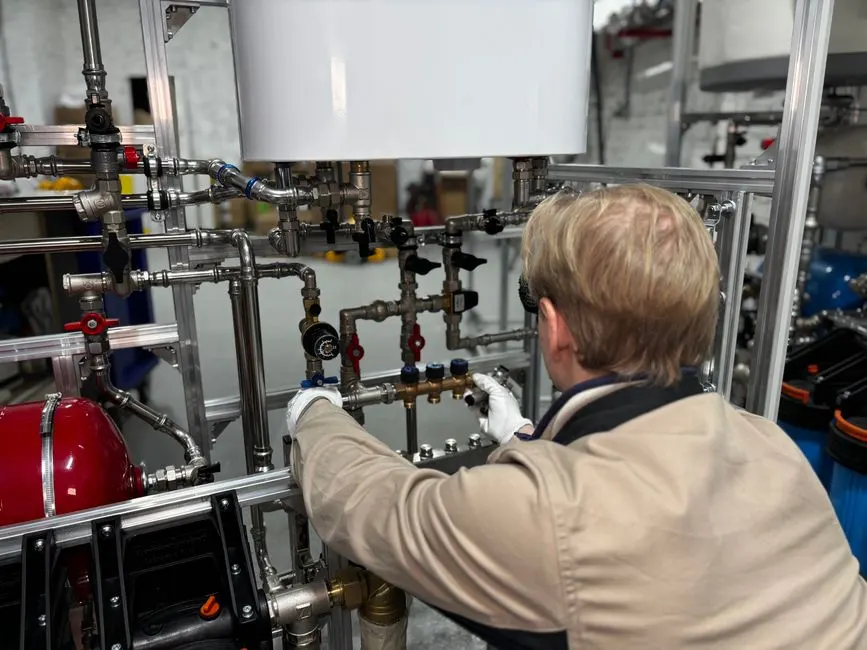
Yes - in nearly every Indiana jurisdiction, replacing or installing a water heater requires a plumbing permit and a passed inspection before the unit can legally go into service. The permit itself usually costs between $50 and $150, and the inspection is a quick 15-30 minute visit once the work is done. Indiana water heater installation permits and code is the set of local and state rules that govern who can do the work, how the unit must be vented and secured, and what the inspector checks before signing off. This guide covers what the code actually says, what the permit costs in 2026, who can pull it, and what happens if you skip it.
Do You Need a Permit for Water Heater Installation in Indiana?
Yes, you need a permit for almost every water heater replacement or new installation in Indiana - including swapping a like-for-like tank. The permit requirement is not about the size of the job; it is about the gas connection, the venting, the temperature-and-pressure relief valve, and the electrical disconnect if you have an electric unit. Those are the parts that can hurt someone if they are wrong.
Most Indiana cities and counties adopt the Indiana Plumbing Code, which is based on the Uniform Plumbing Code (UPC). Some larger jurisdictions like Indianapolis add local amendments on top of that. The practical effect is the same: a licensed plumber pulls the permit, does the work, calls for inspection, and the inspector signs off. If you are replacing a 40-gallon gas tank with another 40-gallon gas tank, you still need the permit. The only common exception is a straight repair - replacing a thermocouple or a heating element - which is not a permitted event.
Homeowners sometimes ask whether they can pull the permit themselves. In some Indiana counties, a homeowner can pull a permit for work on their own primary residence, but the work still has to meet code and pass the same inspection. In practice, most homeowners hire a licensed plumbing contractor because the permit, the inspection, and the warranty all come as one package. If you want the job done once and done right, our team handles water heater installation in Indiana from permit to final inspection.
What Are the Water Heater Installation Codes in Indiana?
Indiana water heater installation code covers eight main areas: clearance, venting, relief valve, drain pan, seismic strapping, combustion air, electrical disconnect, and pipe material. The inspector will check every one of them, and a failure on any single item means a re-inspection and a delay.
Here is what we verify on every install:
- Clearance: 1 inch minimum from combustibles for a standard gas tank, and enough room in front for service. A 40-gallon tank needs roughly 2 feet of working space.
- Venting: gas units must draft properly. A single-wall vent connector needs 6 inches of clearance from combustibles; double-wall (B-vent) needs 1 inch. The vent must rise at least 1/4 inch per foot toward the chimney or termination.
- TPR valve: the temperature-and-pressure relief valve must be piped to within 6 inches of the floor, or to the exterior, in the same diameter as the valve outlet - usually 3/4 inch. No threaded end, no cap, no reduction.
- Drain pan: required when the unit sits in an attic, on a finished ceiling, or where a leak would cause damage. The pan drain must run to an approved location.
- Strapping: two straps - one in the upper third, one in the lower third - for any tank in a garage or where seismic or tip-over risk exists.
- Combustion air: a gas water heater in a closet needs two openings - one within 12 inches of the floor, one within 12 inches of the ceiling - sized to the BTU input of the unit.
- Electrical: electric units need a properly sized breaker, correct wire gauge, and a disconnect within sight of the unit.
- Pipe material: copper, PEX, or CPVC for supply lines; no galvanized nipples directly into the tank unless dielectric unions are used.
We also check the gas line sizing. A 40,000 BTU tank needs a 1/2-inch line at short runs, but a long run or a shared line may need 3/4 inch. Undersized gas lines cause the unit to short-cycle and soot the burner - a problem the inspector will catch and you will pay to fix twice.
How Much Does a Water Heater Installation Permit Cost in Indiana?
A water heater installation permit in Indiana typically costs between $50 and $150 in 2026, depending on the county and whether the jurisdiction charges a separate inspection fee. Some rural counties charge as little as $35; Indianapolis and the surrounding metro can run $100-$175 for the permit plus a $50-$75 inspection fee.
The permit is a small line item compared to the rest of the job. A standard 40-gallon gas tank replacement - unit, labor, permit, haul-away, and new flex connectors - runs $1,200 to $2,200 installed in this area. A 50-gallon gas unit is $1,400 to $2,500. Tankless installs are higher because of venting and gas line upgrades, often $2,800 to $4,500. If you are comparing quotes, ask whether the permit and inspection are included. A quote that is $200 cheaper but does not include the permit is not cheaper - it is a problem waiting for the next home inspection.
We include the permit in every written quote. No surprises, no separate invoice from the county. If you are in one of the smaller communities we serve, like Indiana water heater in Reelsville, the permit process is handled by the county and we take care of the paperwork.
Who Can Pull a Water Heater Installation Permit in Indiana?
In most Indiana jurisdictions, only a licensed plumbing contractor can pull a water heater installation permit. A homeowner may be allowed to pull a permit for work on their own primary residence in some counties, but that varies - and the homeowner still has to pass the same inspection. A handyman cannot legally pull a plumbing permit in Indiana.
The license that matters is the plumbing contractor license issued by the state. A journeyman plumber can do the work under a licensed contractor, but the permit is pulled under the contractor's license number. If someone offers to install your water heater without a permit and says "it's fine, nobody checks," that is your signal to find someone else.
We are a state-licensed plumbing contractor. When we install a water heater, the permit is pulled in our name, the inspection is scheduled by us, and you get a copy of the signed-off permit for your records. That paperwork matters when you sell the house - a missing permit on a water heater is one of the first things a buyer's inspector flags.
What Happens If You Install a Water Heater Without a Permit in Indiana?
If you install a water heater without a permit in Indiana, you can be fined, forced to remove the unit, and required to redo the work under a proper permit - often at double the original cost. The fine varies by jurisdiction, but $250 to $1,000 is common. The bigger cost is the rework: the inspector may require the unit to be disconnected, the venting corrected, and the whole job re-inspected.
There is also the insurance problem. If an unpermitted water heater causes a fire or a flood, your homeowner's insurance can deny the claim on the grounds that the work was not permitted and not inspected. That is a $10,000 to $30,000 risk to save a $100 permit fee.
And then there is the sale of the house. A home inspector will look for the permit sticker or the inspection record. If it is missing, the buyer's agent will ask for it, and you will be the one paying to make it right - usually years after the install, when the original installer is long gone.
The Inspection: What We See and What You Should Expect
The inspection takes 15 to 30 minutes. The inspector checks the permit, verifies the unit matches the permit application, and then walks through the code items above - venting, TPR valve, drain pan, strapping, gas line, electrical. If everything is correct, you get a signed inspection card and the job is closed.
We schedule the inspection as soon as the install is complete. In most Indiana counties, the inspector arrives within 1 to 3 business days. We meet the inspector on site so there is no back-and-forth about what was done. If something needs adjustment - and occasionally it does, like a vent connector that needs a different pitch - we fix it on the spot and the inspector signs off the same visit.
One thing homeowners do not always realize: the inspection is not just a formality. It is the moment the unit becomes legal and insurable. A water heater that has never been inspected is a water heater that has never been verified to be safe.
Common Mistakes We See on DIY and Handyman Installs
We get called to fix a lot of installs that were done without a permit, and the same mistakes show up again and again. Here are the ones that fail inspection most often:
- TPR valve piped wrong. The relief valve drain is reduced to 1/2 inch, capped, or threaded at the end. It must be full-size and open.
- No drain pan. The unit sits on a finished ceiling or in an attic without a pan. When it leaks, the ceiling comes down.
- Vent connector pitched the wrong way. The vent slopes back toward the unit instead of up toward the termination. Carbon monoxide stays in the house.
- Missing combustion air openings. A gas unit in a closet with no make-up air soots up and shuts down.
- Undersized gas line. A 3/8-inch line feeding a 50-gallon tank. The burner starves and the unit never recovers.
- No expansion tank. On a closed system with a backflow preventer, the TPR valve drips constantly. An expansion tank solves it.
- Reusing old flex connectors. They are cheap. Replace them every time.
If you are in a neighborhood with older housing stock - and we see a lot of this in Indiana water heater in Indianapolis where homes from the 1920s through the 1960s still have original gas lines - the gas sizing and venting issues are more common. Older homes were not built for modern water heater BTU inputs.
When to Call a Professional
Call a licensed plumber when the job involves a permit, a gas connection, a vent change, or an electrical disconnect - which covers almost every water heater install. A straight repair like a thermocouple or a heating element does not need a permit, and we handle those too. But if the tank is being replaced, moved, or upgraded, the permit and the inspection are part of the job.
We install, repair, and replace water heaters across central Indiana. If your unit is leaking, not heating, or you are ready to upgrade to a tankless system, we can look at it and give you a straight answer on what it needs. Our Indiana water heater services in Indiana cover everything from a same-day repair to a full replacement with permit and inspection included.
Frequently Asked Questions
Do I need a permit for water heater installation in Indiana?
Yes. Most Indiana jurisdictions require a plumbing permit for any water heater replacement or new installation, including like-for-like swaps. The permit covers the gas connection, venting, TPR valve, and electrical work. A straight repair like a thermocouple or element replacement does not need a permit.
What are the water heater installation codes in Indiana?
Indiana adopts the Uniform Plumbing Code with local amendments. Key requirements include 1-inch clearance from combustibles, a TPR valve piped to within 6 inches of the floor, a drain pan where leaks cause damage, two straps in garages, proper combustion air, and a correctly sized gas line and vent connector.
How much does a water heater installation permit cost in Indiana?
Permits run $50 to $150 in most Indiana counties in 2026, with some metro areas charging $100 to $175 plus a $50 to $75 inspection fee. Rural counties can be as low as $35. The permit is a small part of the total install cost, which runs $1,200 to $2,200 for a standard 40-gallon gas replacement.
Who can pull a water heater installation permit in Indiana?
A licensed plumbing contractor pulls the permit in most jurisdictions. Some counties allow a homeowner to pull a permit for their own primary residence, but the work still must meet code and pass inspection. A handyman cannot legally pull a plumbing permit in Indiana.
What happens if I install a water heater without a permit in Indiana?
You can be fined $250 to $1,000, forced to remove the unit, and required to redo the work under a permit. Your insurance can deny a claim if an unpermitted unit causes damage. A missing permit also creates a problem when you sell the house.
Get Help with Indiana Water Heater in Indiana
If you need a water heater installed, replaced, or repaired - with the permit and inspection handled for you - we can get it done. One call, one quote, and we take care of the paperwork.
Call Indiana water Heater at 123456789 to schedule your installation or ask about your current unit.