Water heater making popping noise? Here's what it means
That popping sound from your water heater is sediment boiling under the burner. Here's what causes it, whether it's dangerous, and what a flush or repair costs in Indiana.
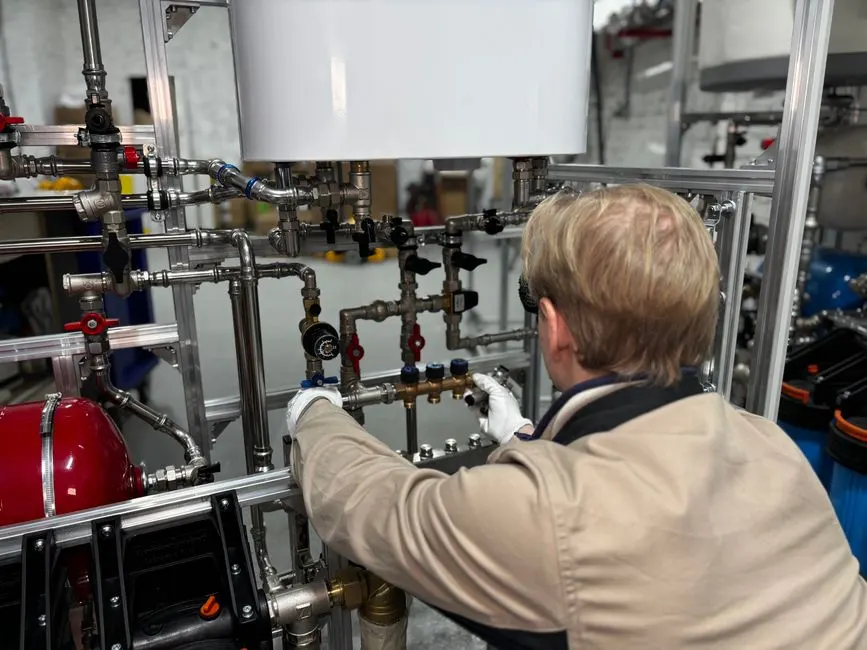
A water heater making popping noise is almost always sediment - dissolved calcium and magnesium that has settled on the tank floor and is boiling under the burner. The water trapped beneath that crust turns to steam, and the steam escapes in bursts that sound like popcorn or small rocks hitting metal. It is not a normal operating sound, and it will not fix itself.
We hear this call every week across central Indiana, and the good news is that it is one of the most predictable problems a tank water heater develops. Below we cover what causes it, whether it is dangerous, how a flush fixes it, what a repair costs in 2026, and when the tank is too far gone to save.
What a popping noise actually means
Water heater popping noise is a symptom of sediment buildup that traps water against the heat source and forces it to flash into steam. Every drop of water that enters your tank carries trace minerals. In Indiana, that mineral load is high - most of our water comes from limestone aquifers and surface reservoirs that pick up calcium carbonate on the way to your tap.
When the burner or lower element fires, it heats the steel at the bottom of the tank first. Clean steel transfers heat into the water efficiently. A layer of sediment insulates that steel, so the water underneath it overheats, boils, and pushes up through cracks in the crust. That is the pop. The thicker the layer, the louder and more frequent the noise gets.
Sediment also shortens the life of the tank in a second way. The steel at the bottom runs hotter than it was designed to, which accelerates corrosion from the inside out. A tank that should last 10 to 12 years often fails at 7 or 8 when it has been popping for a year or more.
Why is my water heater making a popping noise in Indiana?
Water heater popping noise causes in Indiana come down to three things: hard water, heat, and time. Our water hardness runs 8 to 15 grains per gallon in most of the state, and anything above 7 grains is considered hard. That is the raw material for sediment.
Heat is the second ingredient. A gas water heater set to 140°F builds sediment faster than one set to 120°F because the minerals precipitate out of solution sooner. The third is simply time - a tank that has never been flushed will accumulate a visible layer of scale within two to three years.
Here is what we find on service calls, in rough order of frequency:
- Mineral scale on the tank floor - the classic cause, responsible for most popping we diagnose.
- A failing lower heating element - on electric tanks, a cracked element can pop and sizzle as it shorts against water.
- Excessive tank temperature - a thermostat stuck at 150°F or higher boils water faster and amplifies the sound.
- Loose dip tube or anode rod - rarer, but it produces a knocking or popping that mimics sediment.
If you live in an older home with original galvanized plumbing, you are also getting rust flakes into the tank, which settle alongside the minerals. We see this constantly in the small communities we serve, including Indiana water heater in Athens, where a lot of the housing stock predates 1970 and still has original supply lines.
Is a water heater making popping noise dangerous in Indiana?
A water heater making popping noise is not immediately dangerous, but it is a warning that the tank is under stress and will eventually fail. The popping itself will not burn your house down. The conditions that cause it can lead to a leak, a cracked tank, or a failed element.
The real risk is the timeline. Sediment overheats the steel floor of the tank, and overheated steel corrodes faster. When that floor finally gives out, you get a sudden release of 40 to 80 gallons of water - usually onto a basement floor or into a utility closet. We have cleaned up that kind of damage in finished basements, and it runs into the thousands of dollars.
There is one scenario that is genuinely urgent. If the popping is accompanied by a rotten egg smell, a rumbling sound, or water pooling at the base of the tank, shut off the gas or power and call us. That combination points to a failing tank or a compromised anode rod, and it can turn into a leak within days.
How do I stop my water heater from making popping noise in Indiana?
The fix for water heater popping noise is a full tank flush, and it works if the sediment has not already damaged the tank. A flush drains the tank completely, breaks up the scale layer with a controlled flow, and refills it clean. On a mildly scaled tank, the popping stops the same day.
Here is how the process goes when we do it:
- Shut off the gas or power and close the cold-water inlet.
- Connect a hose to the drain valve and run it to a floor drain or outside.
- Drain the tank fully, then open the inlet briefly to stir up the sediment and drain again.
- Repeat until the water runs clear - usually three to five cycles on a heavily scaled tank.
- Refill, restore power or gas, and check the thermostat setting.
For tanks with heavy scale, we also pull the lower element or the burner assembly and physically remove the crust, which a simple drain will not touch. That is the difference between a flush that lasts six months and one that lasts three years.
If your tank is more than eight years old and has never been flushed, the sediment may be bonded to the steel. In that case, a flush can actually open a leak that was being plugged by the scale. We check for that before we start, and we will tell you honestly if a water heater replacement in Indiana is the smarter spend.
Does a water heater making popping noise need repair in Indiana?
Yes - water heater popping noise repair is needed in almost every case, because the noise means the tank is already operating outside its design conditions. The question is whether the repair is a flush or a replacement.
We make that call based on three things: tank age, the volume of sediment we pull out, and the condition of the anode rod. A 5-year-old tank with moderate scale gets a flush and a new anode rod. A 12-year-old tank with a thick crust and a corroded floor gets a replacement recommendation.
If you have an electric tank and the popping is sharp and electrical-sounding rather than a low rumble, the lower element is likely the culprit. That is a straightforward electric water heater repair in Indiana - we test the element, replace it if it is cracked, and flush the tank while we are in there.
Gas tanks with a popping noise usually point to sediment plus a dirty burner. We clean the burner, check the thermocouple, and flush the tank in one visit. If your unit is a tankless model, the equivalent problem is scale on the heat exchanger, and it needs a different service - a tankless water heater maintenance in Indiana flush with a descaling solution rather than a tank drain.
How much does water heater popping noise repair cost in Indiana?
Water heater popping noise cost in Indiana runs $150 to $350 for a standard tank flush, and $400 to $900 if we have to pull the element or burner and do a deep clean. Typical 2026 pricing in this area puts most flush-and-inspect calls at the lower end of that range.
Here is how the numbers break down:
- Standard tank flush: $150-$250
- Flush plus anode rod replacement: $250-$400
- Deep clean with element or burner removal: $400-$900
- New tank water heater installed: $1,200-$2,500 depending on size and fuel type
- Tankless descaling service: $200-$400
A flush is cheap insurance. Replacing a tank that failed early because of neglect costs five to ten times more than the maintenance that would have prevented it. If you are weighing a repair against a new unit, we will give you both numbers on the same visit so you can decide with real figures instead of a guess.
What to watch out for
The biggest mistake we see is homeowners treating popping as a harmless quirk. It is not. It is the sound of your tank working harder than it should, and every month you ignore it costs you efficiency and lifespan.
Other things to avoid:
- Flushing a tank yourself without checking the drain valve first. A plastic drain valve on an old tank can snap off and turn a $200 job into a flood.
- Turning the thermostat down to hide the noise. Lowering the temperature slows sediment buildup but does not remove what is already there.
- Using chemical descalers in a tank water heater. Those products are formulated for tankless heat exchangers and can damage a tank's glass lining.
- Ignoring a second symptom. Popping plus rusty hot water means the anode rod is gone and the tank is corroding.
One more: do not assume a new water heater is immune. If your incoming water is hard and you never flush the new tank, it will start popping in three to four years just like the old one. An annual flush is the single best thing you can do for tank life.
When to call a professional
Call us when the popping has been going on for more than a few weeks, when you see rust in the hot water, or when the tank is over eight years old and has never been serviced. Those are the cases where a DIY drain-and-refill is more likely to cause a leak than fix one.
Our technicians handle water heater repair in Indiana every day, and we carry the parts to flush, descale, and replace elements or anode rods on the first visit. We also serve the smaller towns around the region, including Indiana water heater in Falmouth, where well water and older tanks make sediment a year-round issue.
If you want a shop that handles the whole job - diagnosis, flush, repair, and replacement if it comes to that - we run Indiana water heater services in Indiana out of one local team. No call center, no out-of-state dispatcher.
Frequently Asked Questions
Why is my water heater making a popping noise in Indiana?
Sediment - calcium and magnesium from Indiana's hard water - has settled on the tank floor and is boiling under the burner. The steam escapes in bursts, which sounds like popping. A tank flush removes the sediment and stops the noise in most cases.
Is a water heater making popping noise dangerous in Indiana?
Not immediately, but it shortens tank life and can lead to a sudden leak. The overheated steel floor corrodes faster, and a failed tank can dump 40 to 80 gallons. If you also smell rotten eggs or see water at the base, shut it off and call us.
How do I stop my water heater from making popping noise in Indiana?
Drain and flush the tank completely, then refill it. On a lightly scaled tank, that stops the noise the same day. Heavily scaled tanks need the lower element or burner pulled and the crust removed by hand. We do both in one visit.
Does a water heater making popping noise need repair in Indiana?
Yes. Popping means the tank is running outside its design conditions. The repair is usually a flush, sometimes a flush plus a new anode rod or heating element. If the tank is over 10 years old and heavily scaled, replacement is often the better call.
How much does water heater popping noise repair cost in Indiana?
A standard tank flush runs $150 to $350. A deep clean with element or burner removal runs $400 to $900. Tankless descaling is $200 to $400. A new tank installed is $1,200 to $2,500. We quote both repair and replacement on the same visit.
Get help with Indiana water Heater in Indiana
If your water heater is popping, we can flush it, find the cause, and tell you straight whether it is worth repairing. Call Indiana water Heater at 123456789 and we will get a technician out to your tank.