Why is my water heater leaking from the bottom
A puddle under your tank usually means a failed drain valve, a loose fitting, or a rusted-through tank. Here's how to tell which one you're dealing with in Indiana.
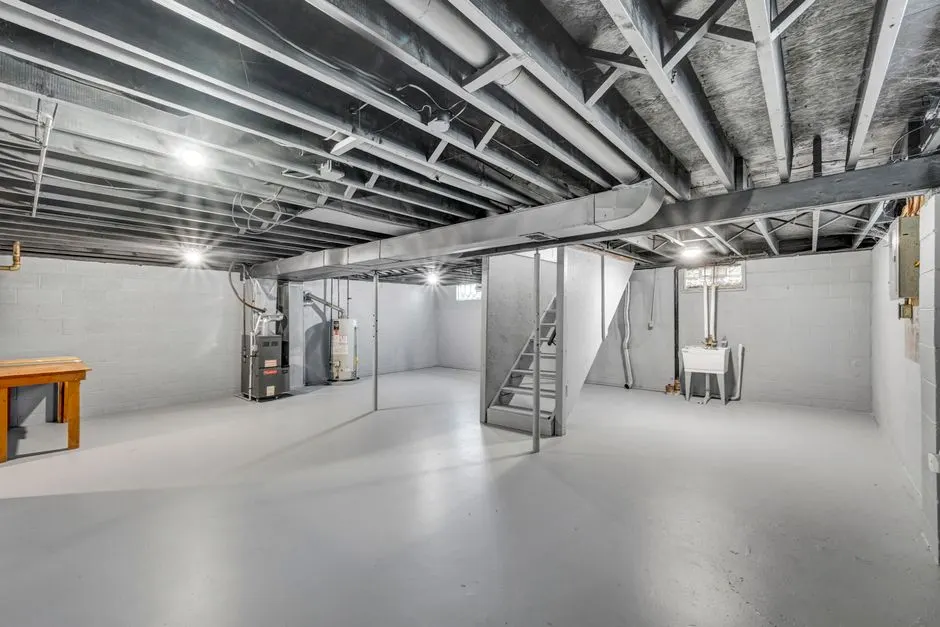
Your water heater is leaking from the bottom because either a component at the base of the tank has failed - the drain valve, the T&P relief valve, a nipple or union, or the lower element gasket - or the steel tank itself has rusted through from the inside. Fitting leaks are repairable for $150-$450; a rusted-through tank means replacement, full stop. This post walks through each cause, how to tell them apart in five minutes, what repair and replacement cost in Indiana in 2026, and when a leak is dangerous enough to shut the gas off and call us.
The short answer: where the water is actually coming from
A water heater leaking from the bottom is a plumbing failure at or below the tank shell that lets stored hot water escape onto the floor, and it needs to be diagnosed before the tank floods your utility room. Water almost never appears at the very bottom of a tank by accident. It runs down the side, drips off a fitting, or pools from a corroded seam, so the wet spot on the floor is usually not the source - it is the destination.
On a standard 40- or 50-gallon tank, that means roughly 300-400 pounds of water sitting above your floor at 120-140°F. A slow drip gives you days. A failed drain valve or a split seam gives you minutes. The first thing to do is shut off the cold inlet valve on top of the tank and, if the leak is near the burner, turn the gas valve to OFF or flip the breaker on an electric unit.
We run these calls every week across central Indiana, and the split is consistent: about 60% of bottom leaks we see are fitting or valve failures, and 40% are tank failures that end in replacement. Knowing which one you have is the whole ballgame.
Why is my water heater leaking from the bottom in Indiana?
Water heater leaking from bottom causes in Indiana come down to six failure points, and Hoosier water chemistry pushes two of them harder than most of the country. Our water runs hard - 10 to 18 grains per gallon is common in Marion, Hendricks, and Johnson counties - which accelerates sediment buildup and eats at tank linings and element gaskets. Combine that with the temperature swings we get between a humid July and a January cold snap, and the fittings at the base of the tank take a beating.
Here is the definition worth remembering: a water heater leaking from the bottom is a loss of containment at the tank base or its connected fittings that requires either a component repair or full unit replacement depending on whether the steel shell is compromised. If the shell is intact, we fix it. If the shell is rusted through, no sealant, patch, or epoxy on the market will hold - and anyone who tells you otherwise is selling you a callback.
The six causes, ranked from cheap fix to replacement
Water heater leaking from bottom causes sort cleanly by cost, and the order below is the order we check them on every call. Start at the top. If the first four come back dry, you are almost certainly looking at a tank failure.
1. Loose or failed drain valve (most common)
The drain valve sits at the bottom of the tank, and it is the single most common source of a bottom leak. Sediment collects against the valve seat, the plastic or brass body cracks, or a garden hose was left threaded on and the washer dried out. A drain valve replacement runs $150-$250 and takes under an hour. If you see water only when you open the valve, the seat is scored - replace it.
2. T&P relief valve weeping
The temperature-and-pressure relief valve opens at 150 psi or 210°F. When it weeps, water runs down the discharge pipe and pools at the base, which makes it look like a bottom leak. A weeping T&P valve is often a symptom, not the disease - it can mean your thermal expansion tank has failed or your incoming pressure is over 80 psi. We test line pressure and the expansion tank before we swap the valve, because replacing the valve alone just moves the problem.
3. Loose nipple, union, or dielectric fitting
Water travels. A loose nipple at the top of the tank can drip down the back of the shell and show up as a puddle at the bottom. Same with a union on the cold side. These are $100-$200 fixes and usually just need re-taping and re-torquing, though galvanized-to-copper connections in older Indianapolis homes often need a dielectric union installed to stop the corrosion loop.
4. Lower heating element gasket (electric units)
On electric tanks, the lower element sits behind a gasket near the base. When that gasket hardens - usually after 6-10 years - water seeps out and runs down to the floor. The part costs under $20; the labor to drain, pull the element, and reseat it runs $150-$300. If the element itself is scaled up, we replace both while we are in there.
5. Condensation (not a leak at all)
In a cold Indiana basement in January, a tank filled with 50°F incoming water can sweat. Condensation shows up as a thin film or small puddle that reappears after every long draw of hot water. Wipe it dry and watch for two hours. If it stays dry, you do not have a leak - you have humidity. A dehumidifier or insulating blanket solves it for under $60.
6. Rusted-through tank (replacement)
This is the one that ends the conversation. Glass-lined steel tanks fail at the seam welds or under the sediment line, and once the glass coating is compromised the steel rusts from the inside out. You will usually see rust streaks down the shell, a bulge at the base, or water that runs continuously no matter what valve you close. A leaking tank cannot be repaired. It gets replaced.
How to tell a tank failure from a fitting leak in five minutes
You can separate a repairable fitting leak from a dead tank with a flashlight and a dry rag, and this five-minute check saves homeowners from paying for a repair that will not hold. Do it in this order.
- Shut the cold inlet. Close the valve on the cold line entering the top of the tank. If the leak slows to a stop within a few minutes, the water is coming from stored tank contents - keep going.
- Dry the base and watch. Towel off the bottom of the shell and the floor. Watch for 10 minutes. A drip that reappears at a fitting is a fitting leak. Water that seeps from the shell seam itself is a tank failure.
- Look for rust trails. Rust streaks running down the side of the tank point to a failed lining. Clean water with no rust points to a fitting or valve.
- Check the age sticker. Every tank has a serial number with the manufacture date encoded. Tanks past 10 years old with a bottom leak are almost always done.
If you get to step four and the tank is 12 years old with rust trails, stop diagnosing and start planning replacement. We handle water heater leak repair in Indiana for the repairable cases and same-week replacement for the rest.
What water heater leaking from bottom repair costs in Indiana in 2026
Water heater leaking from bottom repair cost in Indiana in 2026 runs $150-$450 for fitting, valve, and gasket repairs, and $1,200-$2,800 for a full replacement depending on tank size, fuel type, and code upgrades. Those are the real numbers we quote, and they have moved maybe 5% year over year - parts have stayed relatively flat while labor has crept up.
- Drain valve replacement: $150-$250
- T&P relief valve: $175-$300 (plus expansion tank if needed, $150-$250)
- Nipple or union reseal: $100-$200
- Lower element and gasket (electric): $150-$300
- 40-gallon gas replacement, installed: $1,200-$1,800
- 50-gallon gas replacement, installed: $1,400-$2,100
- 50-gallon electric replacement, installed: $1,200-$1,900
- Expansion tank or code upgrades: $150-$400
If your tank is in a tight closet, in a crawlspace, or needs a new vent run, add $200-$600. Older Indianapolis homes with galvanized supply lines sometimes need a short copper transition, which we quote before we start.
When to replace instead of repair
Replace the tank when the shell is leaking, when the unit is 10 or more years old and the repair exceeds 40% of replacement cost, or when you have had two or more leaks in 24 months. Those three rules cover nearly every case. A 12-year-old tank with a $250 drain valve leak is a coin flip - you can repair it, but you are likely to be back in 12-18 months for something else.
We tell homeowners to think about it this way: a tank has a service life of 8-12 years in Indiana's water. If you are past year 10 and facing a repair over $300, put the money toward a new unit. If you want to move off a tank entirely, tankless water heater installation in Indiana is worth pricing - the units last 20 years and eliminate the tank-failure leak risk altogether.
For a straight swap, our water heater replacement in Indiana service includes haul-away of the old tank, new flex connectors, a new T&P valve, and a code-compliant drain pan. We do not leave a new tank sitting in a pan that is not piped to a drain.
Common mistakes we see homeowners make
The most expensive mistake is trying to seal a rusted tank with epoxy or JB Weld. It holds for a week, then fails catastrophically - usually while you are at work. Tank steel is under constant pressure from 40-80 gallons of water; no surface patch survives that.
Other mistakes we clean up regularly:
- Ignoring the leak and letting it run. A slow drip at the base rusts out the drain pan, the floor, and eventually the subfloor. We have seen $4,000 in water damage from a $200 valve.
- Replacing the T&P valve without checking pressure. If your incoming pressure is 90 psi and the expansion tank is waterlogged, the new valve will weep within a month.
- Turning the gas back on before the leak is fixed. Water and a gas burner do not mix. If the leak is anywhere near the burner compartment, leave the gas off until a technician confirms it is dry.
- Buying a used tank off a marketplace listing. A used tank has an unknown history and no warranty. The $200 you save disappears the first time it leaks.
We see a lot of these in older homes around Indiana water heater in Indianapolis, where 1950s-era utility rooms often have floor drains that are clogged or missing - so a small leak becomes a big one fast.
When to call a professional
Call a professional when you cannot find the source in five minutes, when the leak is at the tank shell, when you smell gas, or when the leak is near the burner or electrical connections. Those are not DIY situations. Neither is a T&P valve that keeps weeping after you have confirmed the pressure is normal.
Our team at Indiana water Heater handles leak diagnosis, repair, and replacement across central Indiana. We find the leak, fix it, and test the line and the tank before we leave - and we tell you upfront whether a repair makes sense or whether you are throwing money at a tank that is done. If you are in a smaller community like Indiana water heater in Yoder or anywhere in the surrounding counties, we run the same trucks and the same pricing.
One more thing: if the leak is actively running and you cannot shut the water off, treat it as an emergency. We offer emergency water heater repair in Indiana for exactly that situation.
Frequently Asked Questions
Why is my water heater leaking from the bottom in Indiana?
The most common cause is a failed drain valve or a loose fitting at the base, which is repairable for $150-$450. If the tank shell itself is rusted through - common on tanks over 10 years old in Indiana's hard water - the unit needs replacement.
Can I fix a water heater leaking from the bottom myself in Indiana?
You can replace a drain valve or reseat a nipple yourself if you are comfortable shutting off water and gas. Tank shell leaks, T&P valve issues, and anything near the burner should go to a licensed plumber - Indiana code requires a permit for replacement in most jurisdictions.
How much does water heater leaking from bottom repair cost in Indiana?
Fitting and valve repairs run $150-$450 in 2026. Full replacement runs $1,200-$2,800 installed, depending on tank size and fuel type. Add $200-$600 for tight spaces or code upgrades like a new expansion tank.
When should I replace a water heater leaking from the bottom in Indiana?
Replace when the tank shell is leaking, when the unit is 10 or more years old and the repair exceeds 40% of replacement cost, or when you have had two leaks in 24 months. A rusted tank cannot be repaired.
Is a water heater leaking from the bottom dangerous in Indiana?
Yes, in two ways. Water near the burner or electrical connections creates a shock and fire risk, and a tank failure can release 40-80 gallons of 140°F water in minutes. Shut off the water and power or gas immediately, then call a professional.
Get help with Indiana water Heater in Indiana
A leaking water heater does not fix itself, and the longer you wait the more floor, drywall, and framing it takes with it. We diagnose the leak, tell you straight whether it is a repair or a replacement, and get your hot water back the same day in most cases.
Call Indiana water Heater at 123456789 and we will get a technician to your door.